Schengen Visa for Thai Citizens 2026: Choosing the Right Embassy, 8 Documents, Common Refusals
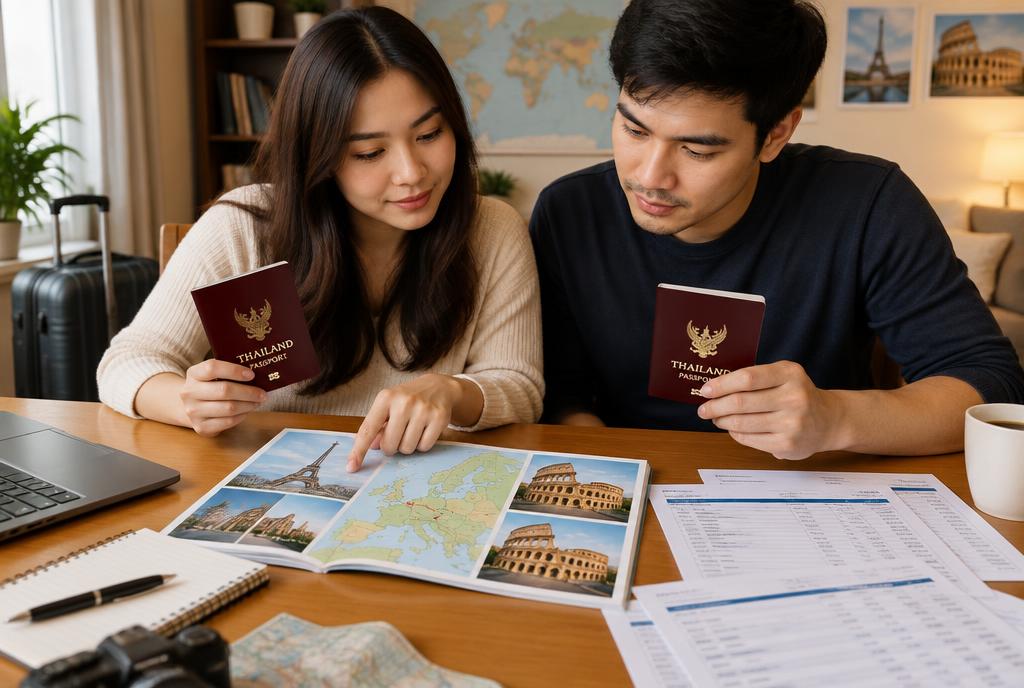
Thai nationals need a Schengen visa (type C) before travelling to Europe's Schengen area. The most important rule: apply at the embassy of your 'main destination' — the country where you stay longest, or the first country you enter if stays are equal. Applying at the wrong embassy can get your application rejected at intake. The core documents are a passport, application form, photo, travel insurance meeting the minimum coverage for all Schengen states, financial evidence, employment or study evidence, a day-by-day itinerary and accommodation for every night. Apply at least 4–8 weeks ahead; a Schengen visa never guarantees entry.
We do not publish company service prices. Ask our team for a case-specific quotation; official fees remain those announced by the authority on the filing date.
The main-destination rule that trips up many applicants
One Schengen visa covers every country in the Schengen area, but you must apply at the embassy of the country that is the main destination of your trip — the one where you spend the most nights. If several countries tie, apply at the first country you enter.
Choosing an embassy because it 'seems easier' instead of following your real itinerary is called visa shopping. Embassies detect it from your itinerary and bookings, and it is a common refusal reason. Planning the trip so it matches the embassy you apply to is the single most important first step.
- Longest stay in France → apply at the French embassy, even if you land elsewhere
- Equal stays → apply at the first country of entry
- Itinerary, accommodation and flights must match the embassy you apply to
- Visas are single or multiple entry at the embassy's discretion; stays are capped at 90 days in any 180
The 8 documents to prepare
A standard Schengen file includes a passport issued within the last 10 years and valid at least 3 months beyond your return, the application form, a photo to spec, travel insurance covering medical costs to the required minimum across all Schengen states, financial evidence over several months, employment or study evidence, a day-by-day itinerary, and accommodation booked for every night.
Each embassy may ask for extras or use its own process — many use external visa centres with long appointment queues. Always check the current list on the website of the embassy you will apply to.
Common refusal reasons and how to prepare
The most frequent refusal ground is doubt that you will return to Thailand, assessed from your ties at home: steady work, income, assets and family. Next come financial evidence that does not fit the trip, a vague itinerary, and travel insurance that misses the standard.
Good preparation means one consistent story across every document: income matches occupation, budget matches itinerary, and the employment letter names leave dates that match the trip. If refused before, a new application should fix the old weaknesses with real evidence — switching embassies with the same file is not a fix.
- Employment letter stating position, salary and approved leave dates
- Bank balance consistent with the trip's length and style
- Insurance covering every Schengen country and every day of the stay
- Accommodation booked for every night, with no gaps
How we work, step by step
- Plan the trip and pick the embassy. Identify the country with the longest stay to choose the correct embassy under the main-destination rule.
- Book an appointment. Many embassies use visa centres with advance booking; queues fill fast in high season.
- Prepare the 8 documents. Passport, form, photo, insurance, finances, employment, itinerary and accommodation.
- Check consistency. Our team verifies every document tells the same story before submission.
- Submit and give biometrics. Attend in person as booked and provide fingerprints.
- Wait and check the visa. Check the name, dates, number of entries and stay length before travelling.
Questions we are asked most
Do Thai citizens need a Schengen visa?
Yes. Thai passports are not exempt; you must be granted a visa before travelling.
Which embassy should I apply to?
The embassy of the country where you stay longest, or the first country you enter if stays are equal. The wrong embassy can reject your application at intake.
How long can I stay?
Tourist visas generally allow up to 90 days in any 180-day period, as stated on the visa.
How much money must I show?
There is no single published figure; each country sets its own reference amounts. What matters more is that the funds fit the trip and come from real income.
Can I re-apply after a refusal?
Yes, but fix the earlier weaknesses with genuine evidence. Switching embassies with the same itinerary can look like visa shopping.
Must I buy flight tickets before applying?
Embassies generally ask for a reservation or itinerary, not a paid ticket. Check the rules of the embassy you apply to.
Do you publish prices or guarantee the outcome?
No. We quote after looking at your documents and situation, and every decision is made by the Thai authority concerned. We will tell you plainly when we think a plan is weak.
Official sources
Reviewed 9 October 2026. These links are starting points; the receiving authority decides the current case-specific requirements.
Other help for visiting abroad
Request a quotation from our visa team
We review your situation and documents first. Decisions are made by the relevant embassy, immigration office or receiving authority, not by our team.